Understanding Swing Weight, Twist Weight, and Balance in Pickleball Paddles

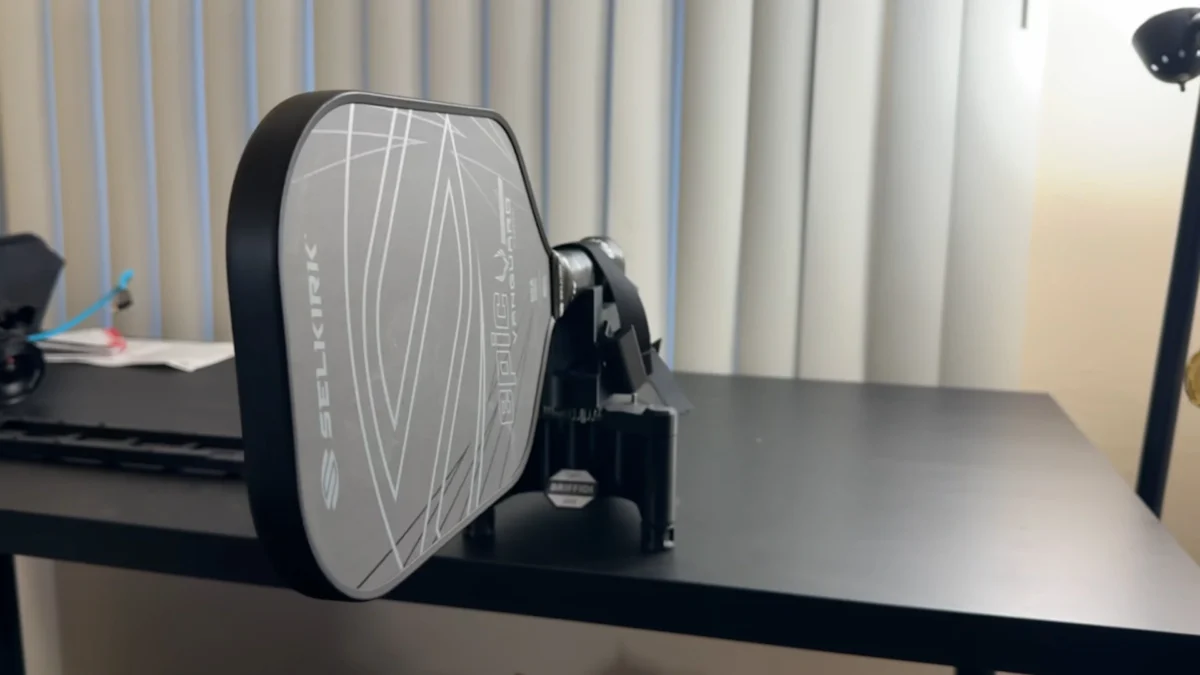
When picking out a new pickleball paddle, most players look at the total weight but that number alone doesn’t tell the full story.
To really understand how a paddle will feel in your hand and perform on the court, you need to look at three connected factors:
- Swing Weight
- Twist Weight
- Balance
These measurements help explain why two paddles with the same listed weight can feel completely different during play. In this guide, we’ll break down each term, how they affect your performance, and how they relate to each other.
What Is Swing Weight?
Swing weight refers to how heavy a paddle feels when you swing it. It’s not about total weight, but where the weight is positioned and how it affects the paddle’s momentum.
Key Points:
- Lower swing weight = easier to maneuver, faster hand speed
- Higher swing weight = more plow-through and power, but slower to swing
If you like to react quickly at the net or prioritize hand speed, a low swing weight paddle will feel faster and more responsive. If you’re aiming for power and drive, a higher swing weight gives more mass behind each shot.
What Affects Swing Weight?
- The balance point (where the weight is distributed)
- Overall paddle length
- Head-heavy vs. handle-heavy design
What Is Twist Weight?
Twist weight measures a paddle’s resistance to twisting when you hit the ball off-center. Like near the edge of the paddle face.
Key Points:
- Higher twist weight = more stable and forgiving on mishits
- Lower twist weight = paddle may twist in your hand, reducing control
This matters because not every shot hits the sweet spot. A paddle with high twist weight keeps the face stable even on imperfect hits, which helps with control, consistency, and confidence.
What Increases Twist Weight?
- Wider paddle shapes
- Foam-injected edges or thicker perimeter
- Heavier paddle designs (especially around the sides)
What Is Paddle Balance?
Balance refers to how the paddle’s weight is distributed from top to bottom.
Three Types of Balance:
- Head-Heavy (Top-Loaded): More weight in the paddle face
- Adds power and plow-through
- Increases swing weight
- Can feel slow in quick exchanges
- Even Balance: Weight is centered throughout
- Offers a neutral feel
- Balances both swing speed and stability
- Handle-Heavy (Head-Light): More weight near the grip
- Feels faster and easier to maneuver
- Reduces swing weight
- Can sacrifice some power
Balance is the foundation that influences both swing weight and twist weight. Even if the paddle’s total weight stays the same.
How These Three Work Together
These three factors are closely connected, and changing one can affect the others.
| If You Want To Improve… | Look For… |
|---|---|
| Faster hands at the net | Lower swing weight + handle-heavy balance |
| Stability on mishits | Higher twist weight + wider face |
| More power on drives | Higher swing weight + head-heavy balance |
Real Example:
- These three paddles may weigh around 8.0 oz
- Paddle A has a low swing weight and handle-heavy balance. Great for quick exchanges
- Paddle B has a low swing weight and high twist weight. Amazing for fast hands and consistency, but less power
- Paddle C has high swing weight and head-heavy balance, leading to more power on drives
Understanding these dynamics helps you match a paddle to your specific playstyle not just your skill level.
Final Thoughts: Don’t Just Look at the Weight
Total paddle weight is only one piece of the puzzle. To really know how a paddle will perform, you need to understand:
- How it swings (swing weight)
- How stable it is on off-center hits (twist weight)
- Where the weight is distributed (balance)
These factors work together to shape power, control, and feel and the right combination can give your game a serious edge.