The Most Common Pickleball Paddle Construction Features: What They Are and Why They Matter

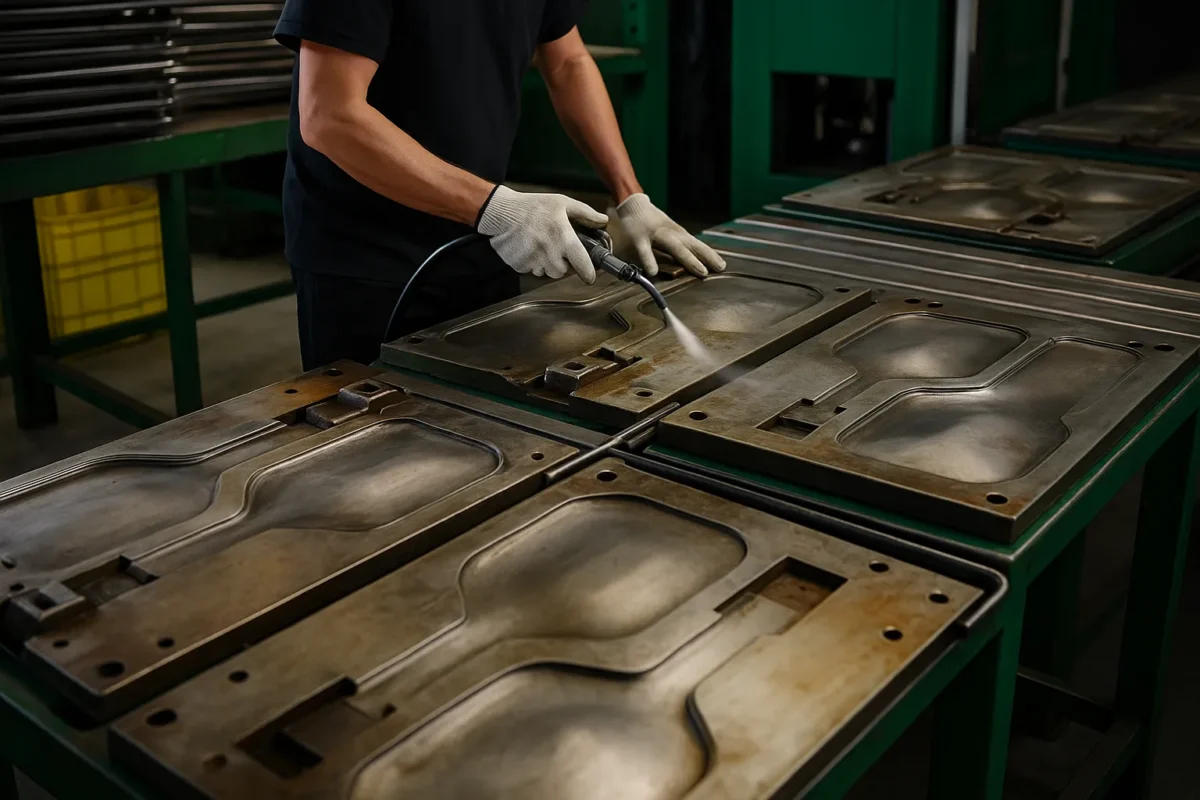
While most players focus on paddle weight, shape, and surface texture, what’s happening inside the paddle is just as important. Construction features determine how a paddle feels, performs, and holds up over time. Even if those details aren’t always visible from the outside.

In this blog, we break down the most common pickleball paddle construction features and how they affect power, control, comfort, and durability.

Comparing Paddle Frames: Bonded Body vs. Unibody

One of the most important construction differences lies in how the paddle handle connects to the face. This affects durability, power transfer, and feel.

Bonded Body Construction
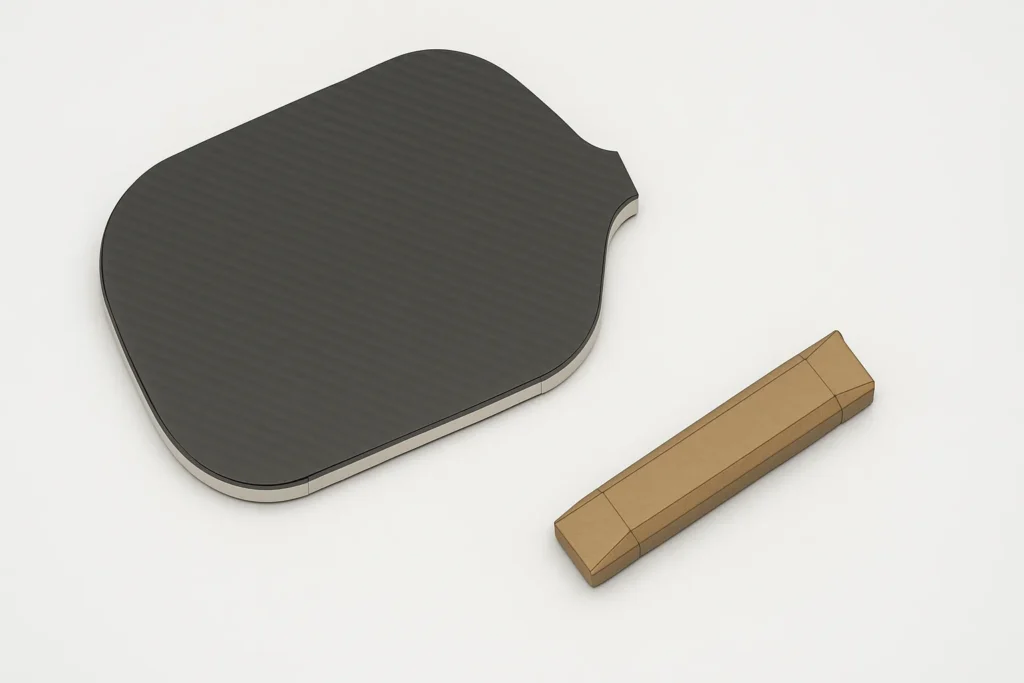
Bonded Body refers to the traditional paddle construction method, where the handle is manufactured separately and glued onto the face.

Why it matters:

  • Allows for lower production costs
  • Can feel less solid or consistent during hard play
  • More prone to looseness or breakage at the handle joint over time

Best For: Recreational players or those on a budget with the understanding that durability is limited compared to unibody designs.

Unibody Construction
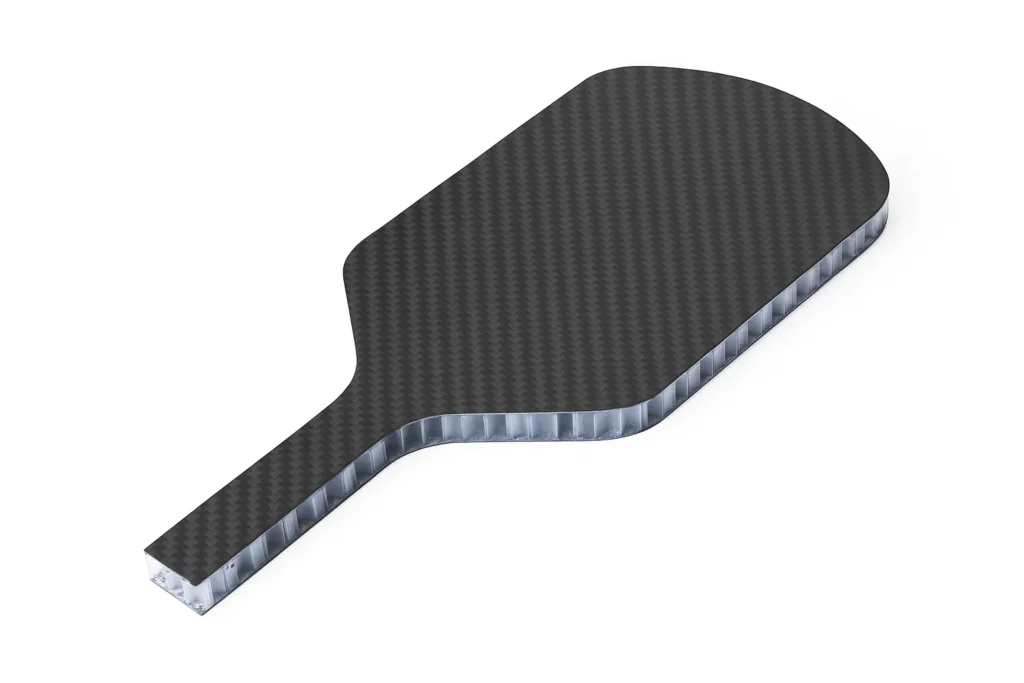
Unibody construction means the paddle face material (often carbon fiber) extends through the handle in one continuous piece. This can also occur when the face and handle are fused through a thermoforming process seen in gen 2 paddles and later. These thermoformed unibody paddles are extremely strong and durable.

Why it matters:

  • Eliminates weak points at the neck of the paddle
  • Provides a more solid, consistent feel across the entire frame
  • Increases power transfer from the handle to the ball

Best For: Players who want a connected feel and long-lasting construction.

Other Key Construction Features

Foam Injected Edges

Foam-injected edges place soft foam around the perimeter of the paddle core. This construction style only started appearing in gen 1.5 paddles and above.

Why it matters:

  • Expands the sweet spot
  • Reduces vibration on off-center hits
  • Improves control and comfort

Best For: Players who want a more forgiving, vibration-free feel.

Floating Core

A floating core is suspended inside the paddle, often surrounded by foam for isolation. This construction style made its first appearance in gen 3 paddles.

Why it matters:

  • Increases dwell time (the ball stays on the face longer) which can improve ball shaping on certain shots
  • Creates a trampoline effect that launches the ball on drives
  • May require a short break-in period for peak performance

Best For: Players who value power and ball shaping ability.

Solid Foam Core
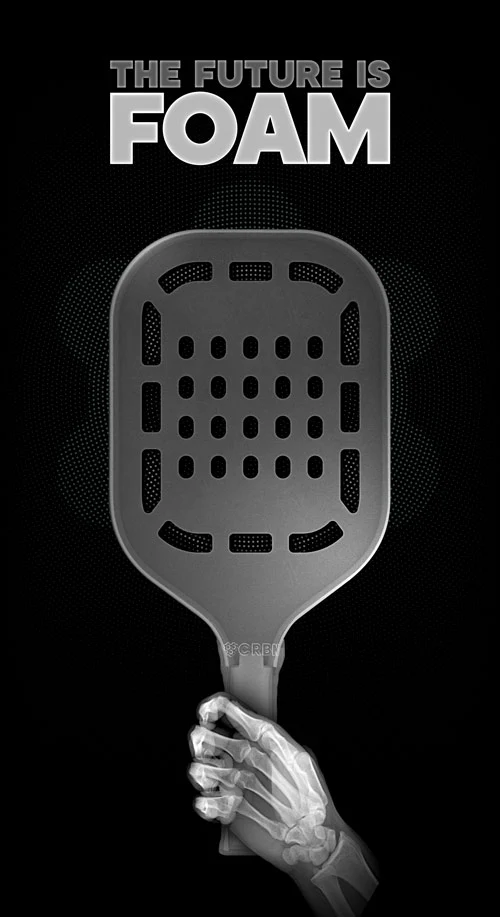
A solid foam core replaces the traditional honeycomb core with a foam core, offering more consistency and durability. Different manufacturers will experiment with different densities and patterns of foam within a paddle. Foam cores are a key feature in gen 4 paddles.

Why it matters:

  • Creates a smooth, consistent response
  • Softens vibration and provides a unique feel
  • Less common but growing in use for premium paddles
  • No core crushing

Best For: Players seeking a more reliable and durable paddle.

Foam Injected Core
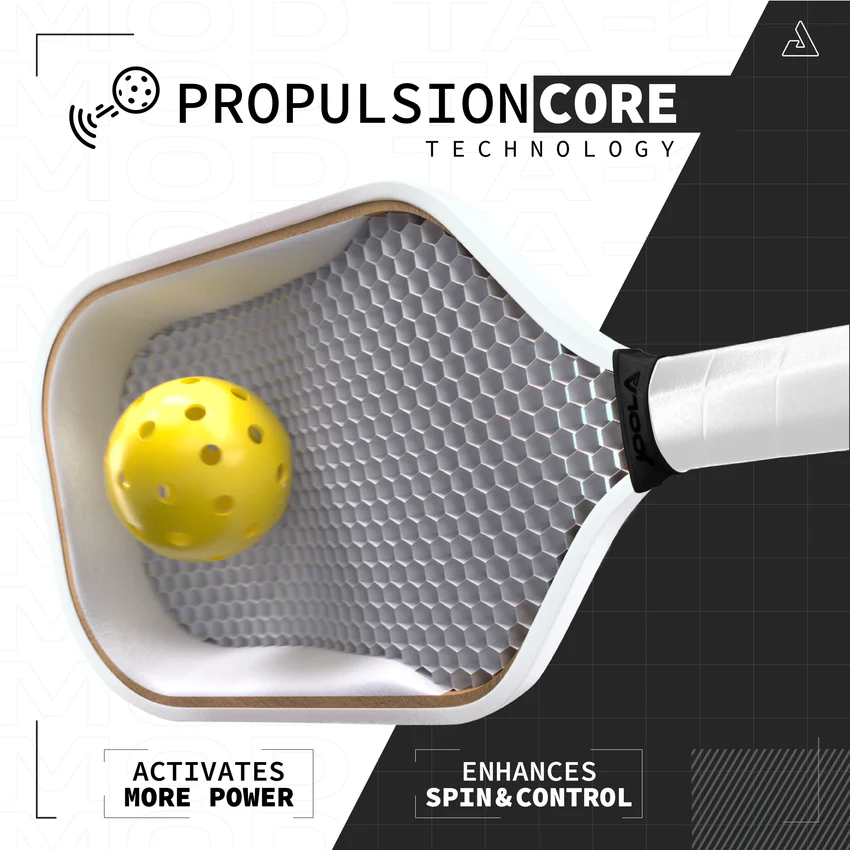
Close-up of next-gen pickleball paddle with Propulsion Core technology activating power and spin, featured in Pickleball Paddle Generations
Propulsion Core technology inside a modern pickleball paddle — boosting power, spin, and control.

Foam is injected around the paddle’s internal core not just at the edges. Different paddle manufacturers will experiment with the foam’s placement. Foam injected cores made their first appearance in gen 3 paddles.

Why it matters:

  • Adds power through a trampoline effect
  • Expands the sweet spot
  • Provides better ball acceleration on drives and counters

Best For: Players who want a blend of explosive power and control.

Forged Handle
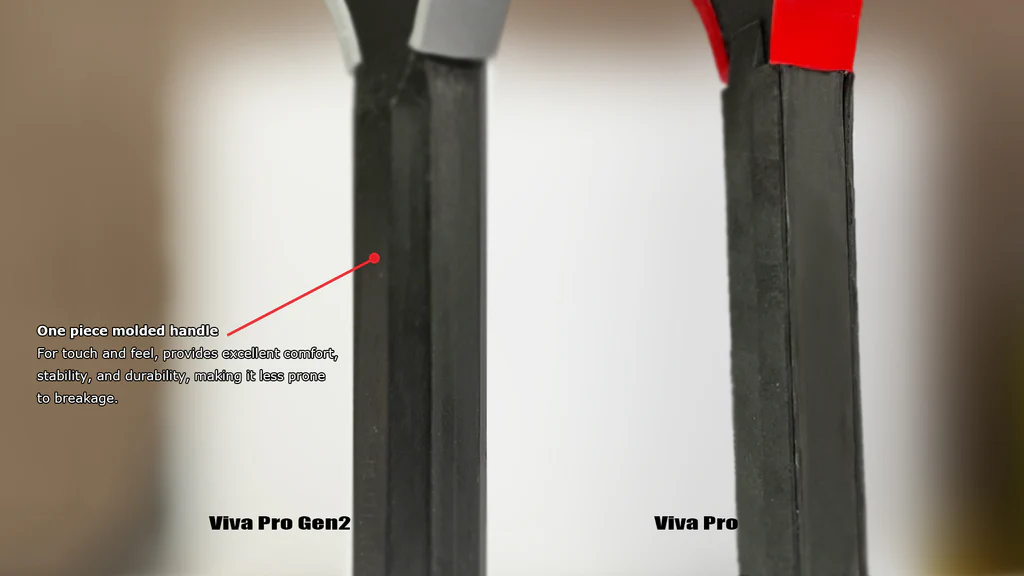
A forged handle refers to a handle that is thermoformed separately from the paddle face, often using a solid, molded material that is then fused to the paddle body through a secondary thermoforming process or glue.

Why it matters:

  • Allows manufacturers to precisely mold the handle into an ergonomic shape for comfort and grip stability
  • Creates a handle that feels more solid and seamless in the hand

Best For: Players who prioritize comfort, grip confidence, and durability in the handle.

Final Thoughts: The Build Inside the Paddle Makes All the Difference

From how the handle is attached to the face, to how the core is supported and shaped, paddle construction plays a huge role in how it feels and performs. While some features improve power and durability, others support touch and comfort. Understanding these construction methods helps you choose a paddle that not only plays well, but lasts longer, feels better, and performs the way you want.
Exploring Unique Pickleball Paddle Surface Textures: Blasted, Acoustene, NanoTac, Fabric & InfiniGrit

Beyond the usual peel ply, textured, and grit finishes, there are a variety of innovative surface textures offering unique performance characteristics. Let’s explore five of these advanced options: Blasted, Acoustene Composite, NanoTac, Fabric, and InfiniGrit.

Blasted Surfaces

What it is: Sand or bead blasting is used to roughen the paddle face, creating a uniform abrasive texture.

Performance:

  • Increases spin and control thanks to heightened friction.
  • Cleaner and more uniform than grit coatings.

Durability:

  • More durable than grit because the texture is embedded.
  • Still prone to faster wear as the abrasion gradually smooths out with use.

Summary: Offers a solid balance of spin enhancement and durability, though expect texture loss over time.

Acoustene Composite

What it is: A proprietary composite (e.g., OWL Sport) engineered for noise reduction while retaining good playability.

Performance:

  • Delivers a softer, quieter slap at contact.
  • Maintains decent spin and control.

Player feedback:

  • Praised for a quieter experience meeting USA Pickleball’s “quiet paddle”.

Durability:

  • Built for long-term use with a solid composite structure and dampened vibration.

Summary: Ideal for venues prioritizing reduced impact noise, without sacrificing performance.

NanoTac

What it is: A tacky, smooth coating (seen in certain Proton models) that provides consistent grip through chemical adhesion, not abrasion.

Performance:

  • Offers reliable spin comparable to light grit, without rough texture.
  • Suitable for players who prefer smooth surfaces.

Player feedback:

  • Reddit users describe it as a “hardened rubber that provides a sticky grip … generating spin of +2000 RPM.”

Durability:

  • Tacky coating resists wear better than traditional grit, though may smooth over time.

Summary: Great for those wanting consistent spin with a smooth feel; outlasts gritty surfaces.

Fabric-Textured Surfaces

What it is: Paddle faces embed woven fabric cotton, fiberglass, etc as texture.

Performance:

  • Offers a unique tactile feel, often praised for enhanced ball control and touch.
  • Creates a quieter experience than harder surfaces

Durability:

  • Less durable than composites or carbon. Woven fibers are prone to fraying or breakdown with heavy play.

Summary: Good for feel, control and a quieter sound; trade-off is reduced longevity compared to harder textures.

InfiniGrit

What it is: Selkirk’s proprietary textured finish combining abrasive grip and durability.

Performance:

  • Engineered to triple the spin longevity of raw carbon surfaces—up to 3x more spin performance according to Selkirk.
  • Supports up to 2,000 RPM spin while maintaining control.

Durability:

  • Surface lasts much longer than standard grit Selkirk reviews say it still grips after months.

Summary: Ideal for players who want long-lasting spin without frequent paddle replacements.

Here’s the updated Final Thoughts section with your direction incorporated — reflecting the rapid evolution of pickleball tech, while emphasizing the importance of playability, noise, and durability over raw texture type.

Final Thoughts: Texture Is Evolving. But Feel, Noise, and Durability Matter More

As pickleball continues to grow, so does the technology behind the paddles. Companies are experimenting with new surface materials and layering techniques to improve everything from spin potential to sound performance and longevity.

Whether it’s NanoTac, InfiniGrit, Acoustene, or a blasted or fabric face, the truth is:
Most of these textures can produce high levels of spin but need to fall within USAP standards. The real difference comes down to:

  • How the paddle feels in play (touch, control, pop)
  • How much noise it makes (especially important in sound-sensitive communities)
  • How long the texture lasts before performance starts to fade

As paddle design becomes more advanced, the best way to choose isn’t just based on texture type. It’s to find a paddle that offers the right combination of performance, comfort, and reliability for your game.

Understanding Swing Weight, Twist Weight, and Balance in Pickleball Paddles

When picking out a new pickleball paddle, most players look at the total weight but that number alone doesn’t tell the full story.

To really understand how a paddle will feel in your hand and perform on the court, you need to look at three connected factors:

  • Swing Weight
  • Twist Weight
  • Balance

These measurements help explain why two paddles with the same listed weight can feel completely different during play. In this guide, we’ll break down each term, how they affect your performance, and how they relate to each other.

What Is Swing Weight?

Swing weight refers to how heavy a paddle feels when you swing it. It’s not about total weight, but where the weight is positioned and how it affects the paddle’s momentum.

Key Points:

  • Lower swing weight = easier to maneuver, faster hand speed
  • Higher swing weight = more plow-through and power, but slower to swing

If you like to react quickly at the net or prioritize hand speed, a low swing weight paddle will feel faster and more responsive. If you’re aiming for power and drive, a higher swing weight gives more mass behind each shot.

What Affects Swing Weight?

  • The balance point (where the weight is distributed)
  • Overall paddle length
  • Head-heavy vs. handle-heavy design

What Is Twist Weight?

Twist weight measures a paddle’s resistance to twisting when you hit the ball off-center. Like near the edge of the paddle face.

Key Points:

  • Higher twist weight = more stable and forgiving on mishits
  • Lower twist weight = paddle may twist in your hand, reducing control

This matters because not every shot hits the sweet spot. A paddle with high twist weight keeps the face stable even on imperfect hits, which helps with control, consistency, and confidence.

What Increases Twist Weight?

  • Wider paddle shapes
  • Foam-injected edges or thicker perimeter
  • Heavier paddle designs (especially around the sides)

What Is Paddle Balance?

Balance refers to how the paddle’s weight is distributed from top to bottom.

Three Types of Balance:

  1. Head-Heavy (Top-Loaded): More weight in the paddle face
  • Adds power and plow-through
  • Increases swing weight
  • Can feel slow in quick exchanges
  1. Even Balance: Weight is centered throughout
  • Offers a neutral feel
  • Balances both swing speed and stability
  1. Handle-Heavy (Head-Light): More weight near the grip
  • Feels faster and easier to maneuver
  • Reduces swing weight
  • Can sacrifice some power

Balance is the foundation that influences both swing weight and twist weight. Even if the paddle’s total weight stays the same.

How These Three Work Together

These three factors are closely connected, and changing one can affect the others.

If You Want To Improve…Look For…
Faster hands at the netLower swing weight + handle-heavy balance
Stability on mishitsHigher twist weight + wider face
More power on drivesHigher swing weight + head-heavy balance

Real Example:

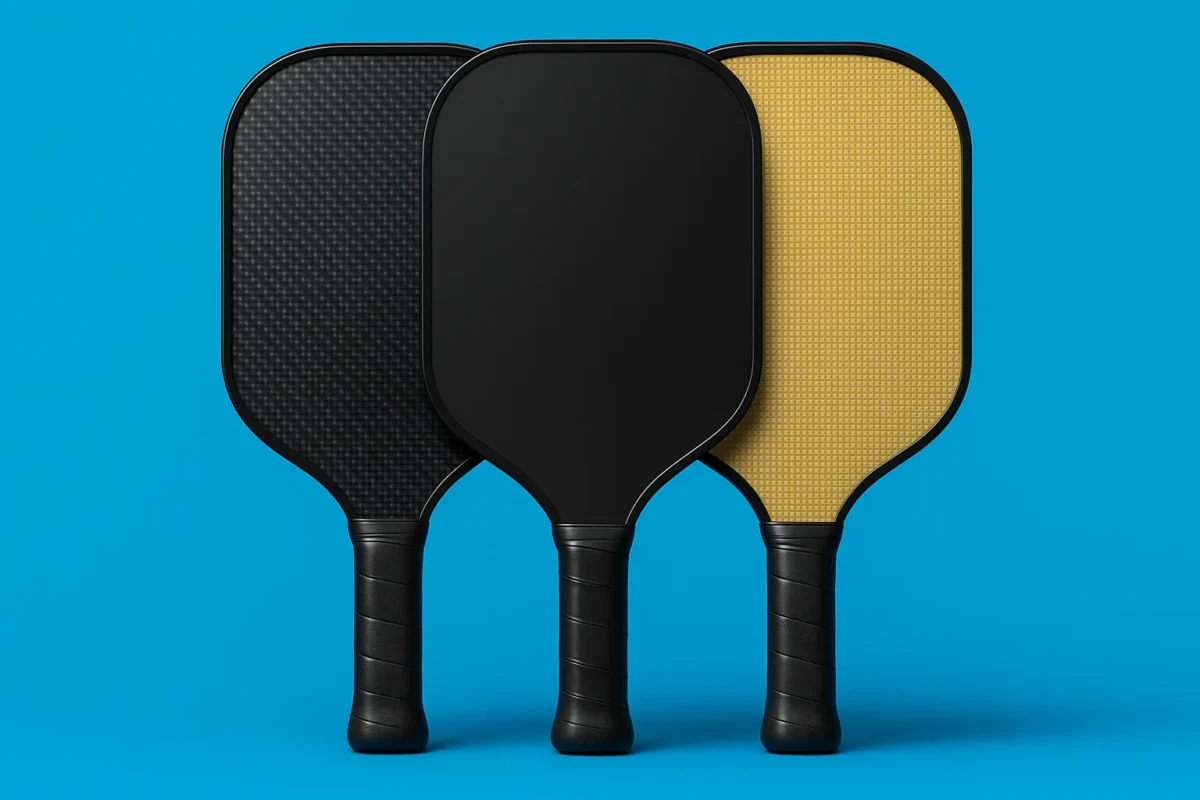
  • These three paddles may weigh around 8.0 oz
  • Paddle A has a low swing weight and handle-heavy balance. Great for quick exchanges
  • Paddle B has a low swing weight and high twist weight. Amazing for fast hands and consistency, but less power
  • Paddle C has high swing weight and head-heavy balance, leading to more power on drives

Understanding these dynamics helps you match a paddle to your specific playstyle not just your skill level.

Final Thoughts: Don’t Just Look at the Weight

Total paddle weight is only one piece of the puzzle. To really know how a paddle will perform, you need to understand:

  • How it swings (swing weight)
  • How stable it is on off-center hits (twist weight)
  • Where the weight is distributed (balance)

These factors work together to shape power, control, and feel and the right combination can give your game a serious edge.

The Right Pickleball Paddle Construction Will Change Your Game: Cold Pressed vs. Thermoformed and More

When choosing a pickleball paddle one of the most important and least understood aspects is how the paddle is constructed.

The manufacturing process behind a paddle impacts its power, durability, feel, and performance consistency. In this guide, we’ll break down four of the most common paddle construction methods. Each has its own pros, cons, and role in the modern paddle market.

Why Paddle Construction Matters

How a paddle is built determines how well its layers bond together, how energy transfers through the face, and how long it holds up under pressure. In many ways, the construction method is the foundation of paddle performance.

A poorly made paddle might feel great for a few games, but break down quickly or become inconsistent. A well-built paddle delivers reliable performance, shot after shot.

Coldpressed Paddles

Coldpressing involves bonding the face and core of a paddle at room temperature using high pressure. This method has been around for years and is commonly used in traditional paddle manufacturing.

Key Characteristics:

  • Paddles are pressed without heat
  • Creates a consistent and predictable feel
  • Internal layers may be bonded together with glue

Pros:

  • Reliable performance with solid control and feel
  • More affordable than thermoformed options

Cons:

  • May lack the power boost found in thermoformed paddles
  • Lower durability compared to seamless thermoformed designs
  • Edges and layers may separate over time under heavy use which is called delamination

Best For: Players prioritizing control, affordability, and consistency over raw power.

Thermoformed Paddles

Thermoforming uses heat and pressure to fuse the paddle’s components into a single, cohesive structure. This newer manufacturing technique is especially popular among high-performance paddles, especially those made with raw carbon fiber faces.

Key Characteristics:

  • Heat softens materials so they can be molded into one seamless piece
  • Paddle edges are often foam-injected for added stability and sweet spot
  • Provides improved power and durability

Pros:

  • Stronger bonds between layers mean better structural integrity
  • Enhanced power due to a stiffer, more reactive face
  • Uniform feel across the entire hitting surface and tends to have a larger sweet spot

Cons:

  • More expensive to produce
  • Stiffer feel may reduce touch or soft game finesse

Best For: Players looking to improve power and paddle longevity, especially in high-speed play.

Internal Pressure Molded Paddles

Internal Pressure Molding is an advanced construction process where the paddle is formed inside a mold with both heat and internal pressure applied. This technique produces paddles with perfect structural uniformity, eliminating weak points and increasing longevity.

Key Characteristics:

  • Heat and pressure are applied from inside the mold
  • Creates a true one-piece paddle with no glue seams or edge separation

Pros:

  • Maximum durability and structural consistency
  • Reduces chances of delamination or breakage
  • Delivers uniform response across the paddle face

Cons:

  • Typically the most expensive construction method
  • Still relatively new, with fewer paddles using this technique
  • Can feel firmer or stiffer than traditional builds

Best For: Players who want long-term durability with minimal risk of paddle breakdown.

Crushed Thermoformed Paddles

Crushed thermoforming isn’t a manufacturing method by design, it’s what happens when a paddle is over-compressed during the thermoforming process, often unintentionally.

This compression can collapse the internal honeycomb structure, resulting in a trampoline effect that dramatically increases power output. Often referred to as a “pop” or “springy” feel.

Key Characteristics:

  • Caused by excessive pressure during manufacturing
  • Increases power, but sacrifices feel and consistency
  • Can lead to durability issues and may violate tournament regulations

Pros:

  • Enhanced shot speed and power
  • Favored by some players who like a springy paddle

Cons:

  • Paddle may feel unstable or overly reactive
  • Poor durability and higher chance of internal breakdown
  • May be non-compliant with USAPA or tournament guidelines due to excessive trampoline effect

Best For: Players chasing raw power but willing to sacrifice control, reliability, and the ability to play in tournaments.

Here’s an additional section you can add to the “Pickleball Paddle Construction Methods” blog — covering delamination and break-in periods, written in a clear, SEO-friendly tone:


Paddle Break-In Periods and Delamination: What to Know

Break-In Period: What to Expect from a New Paddle

Most modern paddles especially those made with thermoformed construction have a short break-in period. This is the time it takes for the paddle to settle and reach its optimal feel after a few hours of play.

During break-in:

  • The paddle may slightly soften or have improved dwell time causing you to gain more spin and power
  • Sweet spot responsiveness can improve as the materials stabilize
  • The overall feel becomes more predictable and consistent

Typically, a paddle feels its best after 5 to 10 hours of play. However, break-in should not drastically alter how the paddle performs. If it does, it may be a sign of structural issues rather than normal wear.

What Is Delamination?

Delamination occurs when the bonded layers of a paddle begin to separate or come apart and is common in coldpressed paddles. This is a serious manufacturing defect or result of wear, and it significantly affects how the paddle performs.

Signs of delamination:

  • A hollow or clicking sound when hitting the ball
  • Inconsistent bounce or “dead spots” on the paddle face
  • A visible gap between the surface layer and the core
  • Sudden loss of control or power, or unusual vibrations

Delaminated paddles are considered damaged and non-compliant for tournament play. In some cases, delamination can occur prematurely due to:

  • Over-compression during thermoforming or crushed cores
  • Poor quality control during cold-pressed or glued paddle production
  • Extreme heat exposure (like leaving a paddle in a hot car)

Final Thoughts: Why Construction Should Guide Your Paddle Choice

Pickleball paddle construction is one of the most underrated but important factors in performance and paddle lifespan. It influences how your paddle feels on every shot and how long it lasts before breaking down.

  • Coldpressed paddles are best for players focused on control and reliability
  • Thermoformed paddles are ideal for those seeking power and durability
  • Internal pressure molded paddles offer the highest structural quality
  • Crushed thermoformed paddles deliver explosive power but come with significant trade-offs in control and longevity

Understanding the differences in construction helps you make a smarter investment. One that aligns with your game goals and playing style.

The Wrong Paddle Surface Texture Is Hurting Your Game: Peel Ply, Textured, and Grit Explained

When you’re choosing a pickleball paddle, one of the most important features to look into is the paddle surface texture. It can make a major difference in your spin, control, and overall feel on the court.

In this guide, we break down the three most common types of paddle surface textures: Peel Ply, Textured, and Grit.

Why Paddle Surface Texture Matters

Surface texture impacts how much friction the paddle face creates with the ball. This friction is what allows you to generate spin, control the pace of your shots, and feel connected to every hit.

But it’s not just about spin, it’s about how long that spin-enhancing surface holds up. Some textures break down quickly. Others are built to last.

Peel Ply Surface

A peel ply surface is created by laying a removable fabric over the face during manufacturing then peeling it away to leave a uniform, micro-textured surface. This texture is baked into the paddle face itself, not added on top. When this is done over carbon fiber, it’s called raw carbon fiber.

Performance Characteristics:

  • Creates a fine, consistent texture
  • Excellent for generating reliable spin over time
  • Texture is subtle but effective, especially for soft-touch play

Durability:

  • Peel ply is the most durable surface type out of the three
  • Because the texture is part of the material itself, it doesn’t flake or chip away like coatings
  • However, all textures wear down with use and over time, dirt and ball residue can settle into the fine ridges, slightly reducing spin potential

Summary: Peel ply offers long-lasting spin performance, but will still gradually smooth out and require regular cleaning to maintain peak grip.

Textured Surface

Textured surfaces are formed by integrating patterns, ridges, or molded designs directly into the paddle face. This can be done during manufacturing or with printed layers over materials like fiberglass or composite.

Performance Characteristics:

  • Offers more noticeable grip than peel ply (depending on design)
  • Delivers solid spin and control with a tactile feel
  • Can vary significantly between brands and paddle models

Durability:

  • Less durable than peel ply, but more durable than grit-based coatings
  • Over time, surface patterns can wear down, especially in high-contact zones
  • Texture is built into the face, not just added on top, giving it a better lifespan than surface-applied grit

Summary: Textured paddles give a balanced spin and durability option, though performance can degrade as the pattern flattens out with heavy use.

Grit Surface

Grit surfaces use sand, epoxy, or other abrasives applied as a top layer to make the paddle feel like fine sandpaper. This surface creates maximum friction, which translates to aggressive spin potential right out of the box.

Performance Characteristics:

  • High friction for spin generation
  • Feels rough and aggressive on contact

Durability:

  • Grit is the least durable of the three texture types
  • The abrasive coating wears down quickly, especially after repeated contact with balls
  • Once the grit begins to fade, spin performance drops dramatically

Summary: Grit surfaces are best for players chasing immediate spin performance, but they come with a short lifespan and often need to be replaced much sooner than other paddles.

Spin vs. Durability: What Matters Most?

It’s important to understand that all three surface types are capable of generating high levels of spin, depending on how the manufacturer designs and applies the surface. Some grit paddles can produce incredible spin right out of the box, while certain peel ply carbon fiber paddles offer more consistent, long-term spin performance with less drop-off over time. Add paddles that you’re curious about to your boards to see spin RPM numbers.

However, the key difference isn’t just how much spin you get. It’s how long that spin lasts.

That’s why durability should be a major factor in your decision. A paddle that performs well on day one but loses its texture after a few weeks won’t give you long-term value. Choosing a paddle surface texture that holds up over time ensures your paddle continues to support your game without needing early replacement.

Surface Texture Durability & Spin Comparison

Texture TypeDurabilityWear Behavior
Peel PlyExcellentWears gradually; dirt buildup can reduce spin
TexturedModerateSurface patterns wear down over time
GritLowFast wear; spin drops off quickly

Final Thoughts: Performance Now vs. Performance Later

When choosing a paddle, surface texture isn’t just about how it plays out of the box, it’s about how it holds up over time.

  • Peel ply has the most consistent, long-lasting spin with minimal maintenance.
  • Textured is a balanced choice between the two and can often have similar performance to peel ply.
  • Grit has good performance initially, but the shortest lifespan. It is also often the cheapest option.

Every surface type has its trade-offs, but when you understand what you’re getting, you can make a smarter, more strategic paddle choice.

The Complete Guide to Pickleball Paddle Shapes: Find the Best Fit for Your Game

When it comes to improving your pickleball performance, paddle shape plays a critical role. While face materials and core types get a lot of attention, the shape of your paddle directly affects how you hit, move, and control the game.

In this guide, we break down the five most common paddle shapes: Widebody, Standard, Hybrid, Elongated, and Extra Elongated.

Why Paddle Shape Matters

Your paddle’s shape affects:

  • Sweet spot size – how forgiving the paddle is on off-center hits
  • Reach – how much court you can cover without overextending
  • Power potential – how much force transfers into your shots
  • Maneuverability – how quickly you can adjust during fast exchanges

Each shape comes with a general length range that helps define how it will feel and perform on the court.

Widebody Paddles

Widebody paddles are shorter and wider than other shapes, with most measuring less than 16 inches in total length.

Strengths:

  • Large sweet spot helps reduce mishits
  • Boosts consistency in dinks, resets, and blocks
  • Improves control in tight net exchanges

Trade-Offs:

  • Shorter reach limits ability to attack high or wide balls
  • Less power leverage on drives and overheads

Best For: Players focused on touch, control, and forgiveness.

Standard Paddles

Standard paddles typically measure about 16 inches in length, offering a familiar, well-rounded profile.

Strengths:

  • Balanced blend of power, control, and maneuverability
  • Reliable option for players who value overall consistency
  • Good for switching between offense and defense smoothly

Trade-Offs:

  • Doesn’t specialize in any one area
  • Moderate reach and sweet spot size

Best For: Players refining complete versatility in their game.

Hybrid Paddles

Hybrid paddles generally fall around 16.25 inches in length, striking a balance between reach and maneuverability.

Strengths:

  • Adds slightly more reach than standard paddles
  • Maintains a manageable weight and swing speed
  • Helps with coverage without slowing hand speed

Trade-Offs:

  • Smaller sweet spot than widebody paddles
  • Doesn’t deliver the same power potential as full elongated shapes

Best For: Players wanting a balance between power and precision.

Elongated Paddles

Elongated paddles measure approximately 16.5 inches in length, offering an extended face for added leverage and reach. This shape is the most popular among current players.

Strengths:

  • Increased reach for volleys, overheads, and angle coverage
  • More leverage to generate power on drives and serves
  • Higher vertical sweet spot, ideal for increasing leverage

Trade-Offs:

  • Taller face leads to a higher vertical sweet spot
  • Requires more precision and timing

Best For: Players focused on increasing power and reach.

Extra Elongated Paddles

Extra elongated paddles push paddle length beyond 16.5 inches, approaching the maximum dimensions allowed by official rules (typically 17″).

Strengths:

  • Longest reach of any paddle shape
  • Maximizes power, especially on serves and attacks
  • Even higher vertical sweet spot, ideal for the most leverage possible

Trade-Offs:

  • Reduced maneuverability in fast hand battles
  • Demands precise control and technique

Best For: Players looking to maximize offensive reach and power.

Paddle Shape & Length Comparison

Here’s a quick side-by-side to help you visualize the performance traits and size of each shape:

ShapeTypical LengthStrength FocusTrade-Off
WidebodyLess than 16″Sweet spot size, controlShort reach, less power
StandardAround 16″Balanced all-around performanceDoesn’t specialize
HybridAround 16.25″Reach + maneuverabilitySmaller sweet spot
ElongatedAround 16.5″Power, reach, vertical coverageLess forgiving
Extra ElongatedOver 16.5″Max reach, leverage, powerLow maneuverability, precision required

Conclusion: One Piece of the Paddle Puzzle

Choosing the right pickleball paddle shape is just one of many important decisions players face when finding the perfect paddle. While shape affects your reach, control, sweet spot size, and power, it works in combination with other key factors to determine how a paddle performs.

The best approach is to start with what you want to improve in your game, then select a shape that supports that goal. From there, you can explore paddle materials and construction to fine-tune your performance even further.

Remember, no single paddle shape fits everyone. But when matched with your playstyle and priorities, the right shape can give you a real edge on the court.

You’re Looking At Paddle Faces Wrong: Carbon Fiber, Kevlar, and What T700 Really Means

When you’re shopping for a pickleball paddle, the material on the face of the paddle can drastically affect how it performs. But with terms like T700, 18K, Toray, and Kevlar floating around, it can be hard to tell what’s marketing hype and what’s actually meaningful.

This guide breaks down the most common pickleball face materials — including the science behind them — so you can pick a paddle that fits your playstyle and performance needs.

Why the Paddle Face Matters

The face is the outer surface of the paddle that contacts the ball. It’s responsible for:

  • Spin potential
  • Power transfer
  • Touch and feel
  • Durability

Different materials offer different combinations of these qualities. While there are many surface materials used by different manufacturers, let’s look at the most common face materials used today.

Carbon Fiber

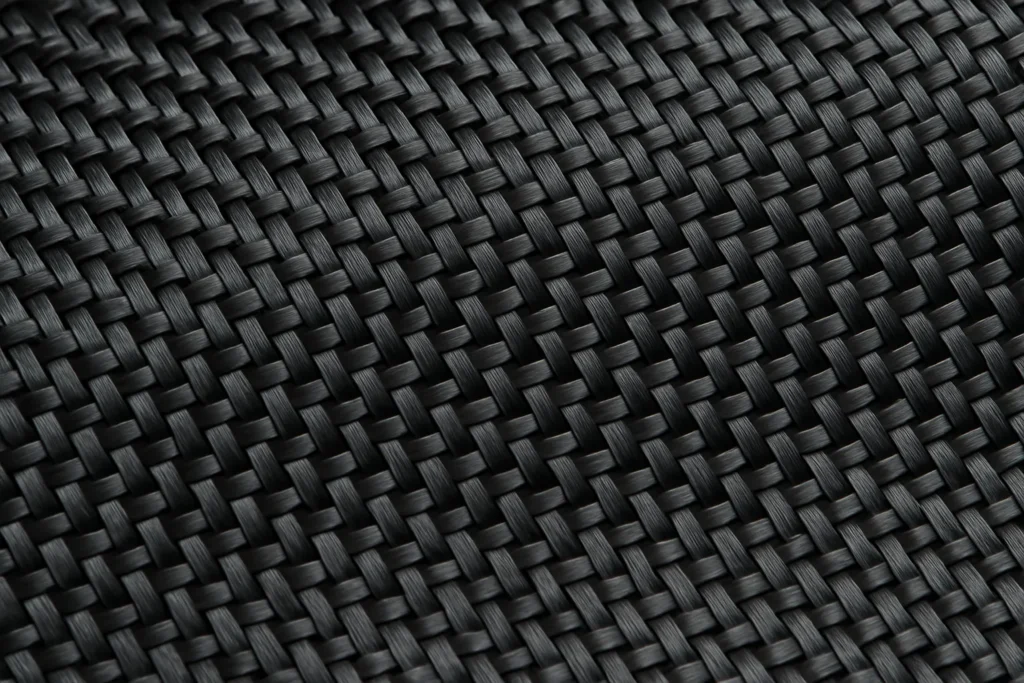
Close-up of carbon fiber weave used in high-performance paddle face materials for pickleball paddles
Detailed texture of woven carbon fiber, a key material used in modern paddle face construction for strength, spin, and durability.

Carbon fiber is one of the most popular materials for high-performance paddles. It’s strong, lightweight, and naturally textured — which makes it excellent for spin and control.

Why Most Paddles Use T700 Carbon Fiber

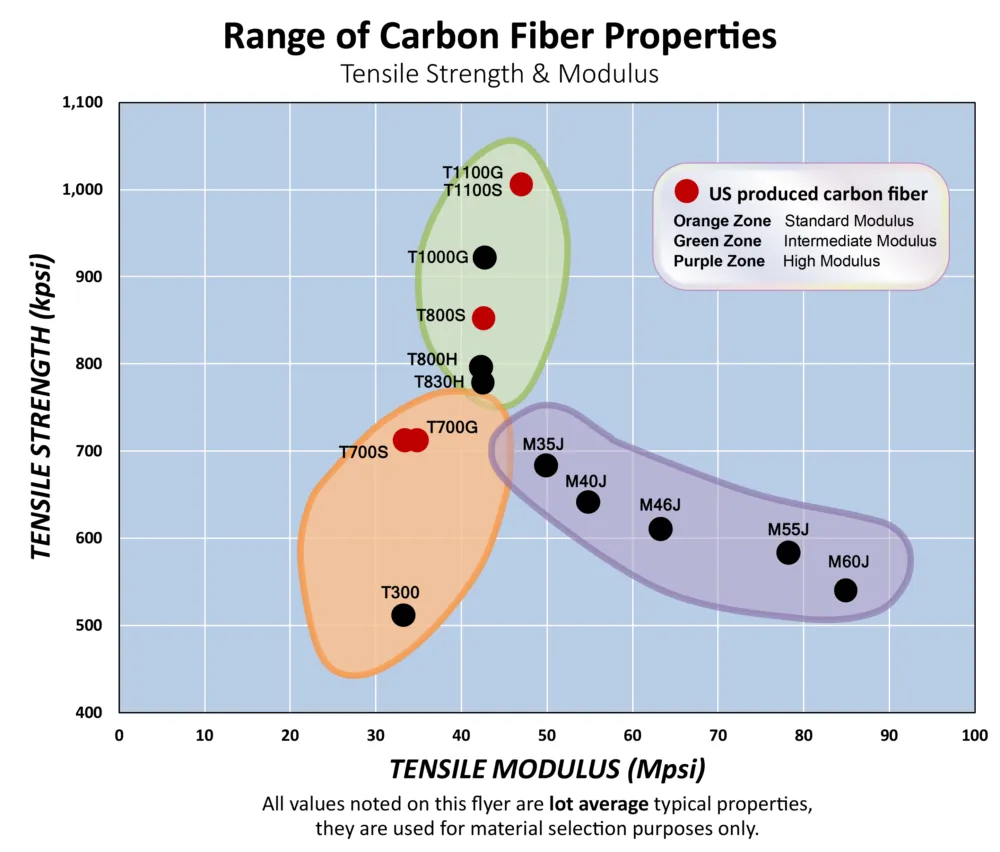
When it comes to carbon fiber, tensile strength plays a key role in how a paddle performs. Simply put, it measures how much stretching the material can withstand before it breaks.

  • Lower tensile strength carbon fibers (like T300 or T500) tend to offer more flex, which translates to greater control and softer touch.
  • Higher tensile strength fibers (like T800 or T1000) are stiffer and offer more pop and power, but they can reduce touch and feel on delicate shots.
Chart showing tensile strength vs tensile modulus of carbon fiber grades used in paddle face materials, created by Toray Industries
This Toray Industries chart illustrates the relationship between tensile strength and modulus across carbon fiber grades commonly used in paddle face design.

That’s why many pickleball paddle manufacturers have standardized around T700 — it strikes the right balance between control and power, giving players the versatility needed for both driving the ball and resetting at the kitchen line. It’s strong, responsive, and reliable across different playstyles.

What Does “18K” Mean?

When you see 18K, 12K, or 3K in paddle descriptions, that refers to the number of tows — or bundles of carbon filaments — woven into the face:

  • 3K = 3,000 filaments per tow
  • 12K = 12,000 filaments per tow
  • 18K = 18,000 filaments per tow

Higher tow counts usually mean a tighter, more rigid weave, which can influence paddle stiffness and power. Here’s how they generally compare:

Tow CountSpin PotentialFeelPower
3KModerateSofter, more controlModerate
12KSlightly more spinBalancedSlightly more power
18KHighStiff, responsiveHigh

What Is Toray Carbon Fiber?

Exterior of Toray Industries building, a leading supplier of carbon fiber materials used in paddle face technology
Toray Industries, a global leader in carbon fiber production, supplies advanced materials used in high-performance paddle face construction.

Toray is a Japanese manufacturer known for producing some of the world’s highest-quality carbon fibers. If a paddle advertises “Toray T700,” it means it uses authentic Toray-manufactured carbon, which is known for consistency, strength, and durability. It’s a good sign — not all carbon is created equal.

Titanium (polyester weave)

Titanium (polyester weave) was introduced in 2024 as a new face material in the pickleball world, offering an alternative to traditional carbon fiber and fiberglass. Despite the name, it’s not made of actual metal. Instead, it’s a polyester-based fiber designed to provide a softer, more controlled feel. This material is often marketed as “titanium weave” due to its sleek appearance, but its performance leans more toward touch and control than raw power.

How “Titanium” Weave Actually Performs

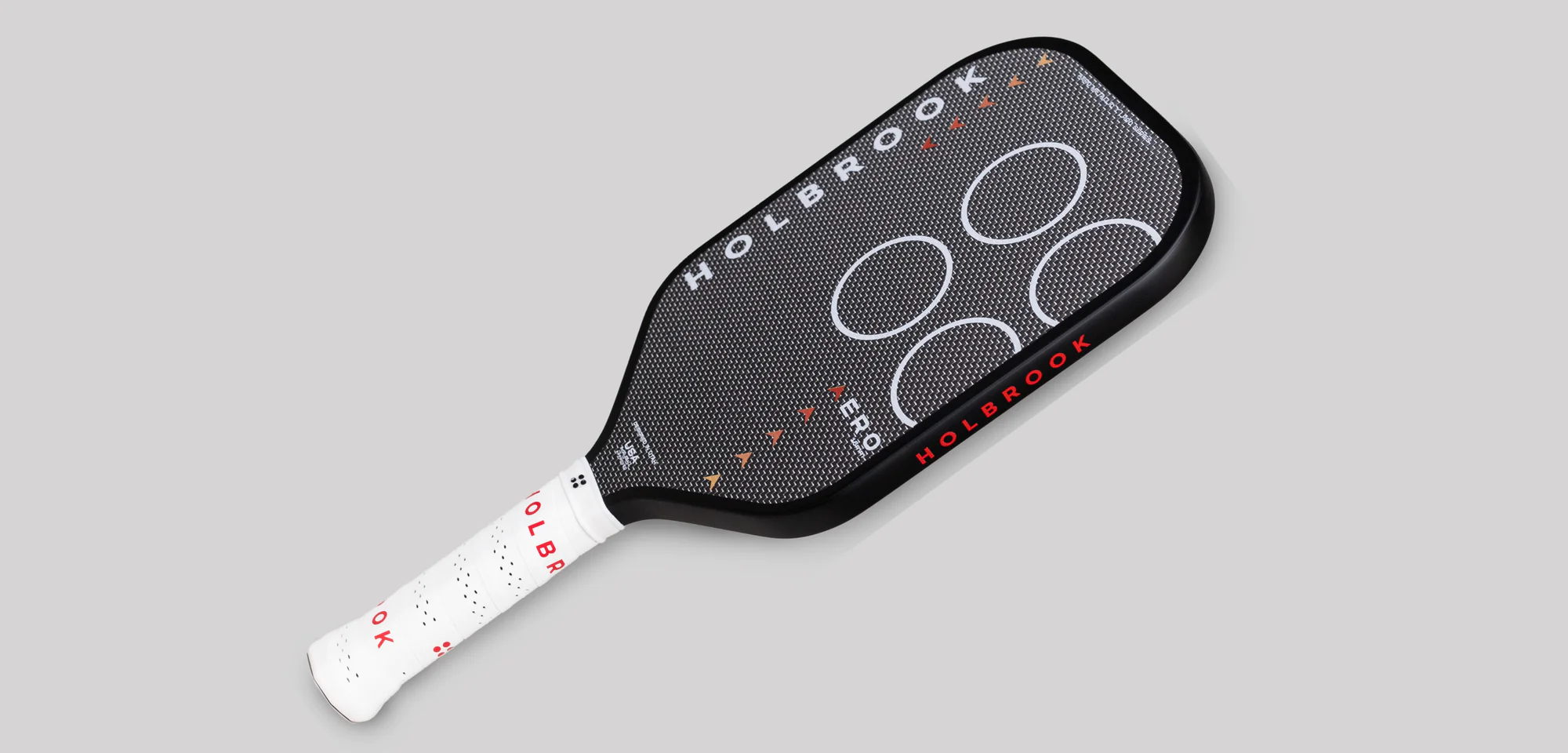
Close-up of Holbrook pickleball paddle face with textured carbon fiber surface and modern aerodynamic design
Holbrook’s carbon fiber paddle face offers a sleek, high-performance surface designed for precision and spin.

The polyester-based material used in these faces does offer some unique playing characteristics, especially when compared to stiffer materials like carbon fiber.

Softer Feel, More Control

PET (polyethylene terephthalate), the material behind most “titanium” weaves, is naturally more flexible and softer than carbon fiber. That flexibility means the paddle face absorbs more energy on impact, which leads to:

  • Increased dwell time (the ball stays on the paddle longer)
  • Improved control on soft shots, drops, and resets

This makes titanium weave paddles appealing to players who prefer a more controlled, touch-oriented game.

Less Power, Similar Spin

With this softer feel you’ll usually experience:

  • Less pop and power on drives or overheads
  • Similar spin generation as carbon fiber paddles depending on texture construction

So while titanium PET paddles offer a smoother, more controlled experience, they don’t match the power and pop of raw carbon fiber faces.

Fiberglass (Composite)

Fiberglass is another popular face material, especially for beginner and intermediate paddles. It’s generally:

  • More flexible than carbon fiber causing more of a rebound effect
  • Better for power, especially for players who don’t generate a lot of their own

However, fiberglass faces typically have a surface texture to add spin which wears away faster than carbon fiber. They’re a solid choice for players who prioritize pop over touch or durability.

Kevlar and Aramid Fiber

Spool of aramid fiber used in manufacturing durable paddle face materials for pickleball paddles
High-performance aramid fiber, often branded as Kevlar, is used in modern paddle face technology to improve durability and vibration control.

This is where things can get confusing. Some brands advertise Kevlar, while others say aramid fiber — are they the same thing?

Aramid Fiber vs. Kevlar

  • Aramid fiber is a class of strong synthetic fibers used in aerospace and military applications. It’s known for being lightweight, durable, and resistant to heat and abrasion.
  • Kevlar is a brand of aramid fiber made by DuPont. So all Kevlar is aramid, but not all aramid is Kevlar.

In pickleball, brands may use generic aramid fibers or licensed DuPont Kevlar. Either way, these materials are known for:

  • High impact resistance
  • Soft, controlled touch
  • Long durability life

Kevlar faces are usually a bit softer than carbon fiber and offer a more muted feel on contact, making them great for players who value control and defense.

Kevlar Uses “K” Naming Too — Just Like Carbon Fiber

Just like carbon fiber, Kevlar (and other aramid fibers) is woven into sheets using bundles of fibers called tows. These tows are grouped by the number of individual filaments they contain — and that’s where the “K” naming system comes in.

  • 3K Kevlar = 3,000 filaments per tow
  • 12K Kevlar = 12,000 filaments per tow
  • 18K Kevlar = 18,000 filaments per tow

This naming system mirrors how carbon fiber is labeled. In general:

  • Lower K counts (like 3K) produce a lighter, more flexible weave with a softer feel.
  • Higher K counts (like 12K or 18K) create a tighter, stiffer weave that can provide more power, spin, and responsiveness.

So when you see a paddle listed with something like “12K Kevlar,” it’s referring to the density of the fiber weave, not its strength rating or brand. The K number affects feel, weight distribution, and stiffness, just as it does with carbon fiber.

Understanding the K system helps you compare materials more accurately and gives insight into how a paddle might feel during play.

How to Choose the Right Paddle Face Material

Here’s a quick breakdown of which material might suit you best:

MaterialSpin DurabilityFeel
Carbon FiberHighConsistent control and power
FiberglassLowHigh pop and power
Kevlar/AramidHighSoft feel and control

If you’re serious about spin and control, look for raw carbon fiber, preferably from a trusted source like Toray. If you want more pop, fiberglass might be your best bet. And if you’re after control and softness, consider trying a paddle made with Kevlar or aramid fiber.


Final Thoughts: Don’t Fall for the Marketing Alone

Paddle face materials can make a big difference in how your paddle plays, but don’t get too caught up in the buzzwords. Just remember:

  • T700 = durable, standard pickleball grade carbon fiber
  • 18K = tightly woven carbon, often stiffer and more powerful
  • Kevlar = high-quality branded aramid fiber
  • Toray = high-quality branded carbon fiber

The right paddle depends on your playing style, not just the name on the label.

How Pickleball Paddle Generations Have Transformed the Game

Pickleball is one of the fastest-growing sports in the U.S., and it is easy to see why. The sport combines elements of tennis, ping pong, and badminton into a fun, fast-paced game that people of all ages can enjoy. While it is easy to get started with just a paddle and a ball, more players are realizing that the paddle you choose makes a big difference in how you play and also in how you improve.

In this article, we will discuss:

Over the years, pickleball paddles have gone through several stages of innovation. Each generation of paddles, from the original wooden designs to today’s advanced foam-core technology, offers different benefits depending on your skill level, style of play, and personal preferences. This article explores the differences between pickleball paddle generations 0, 1, 1.5, 2, 3, and 4 to better understand which paddle may be the perfect fit for you, whether you are a complete beginner or an experienced player looking to up your game. 

Generation 0: The Wooden Era

Classic wooden pickleball paddle on outdoor court surface featured in Pickleball Paddle Generations

The first pickleball paddles were elementary and made of solid wood. These paddles were heavy, lacked flexibility, and provided minimal control. While they served their purpose in the sport’s infancy, wooden paddles quickly became obsolete as manufacturers experimented with lighter and more responsive materials.

Generation 1: Cold-Pressed Construction

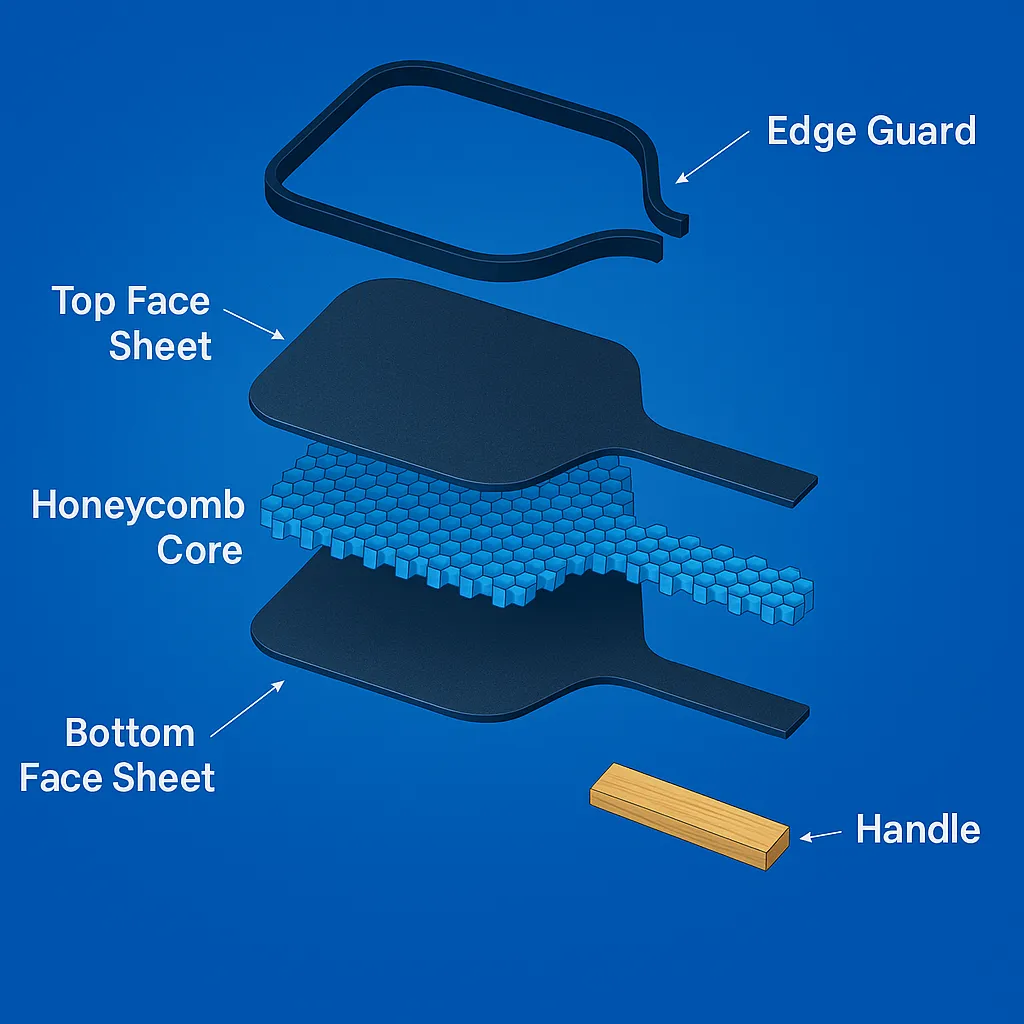
Gen 1 pickleball paddle construction with honeycomb core, face sheets, edge guard, and handle — featured in Pickleball Paddle Generations
An exploded view of Gen 1 pickleball paddle construction.

Generation 1 paddles are defined by a cold-press construction process and relatively basic materials. Because they are cold pressed, there is more ball dwell time and a plush feel, allowing for easier shaping. These paddles use traditional polymer honeycomb cores and are built without high-pressure molding or edge foam. Most Gen 1 paddles feature fiberglass or simple carbon fiber faces and are assembled using adhesive, making them more prone to delamination, a situation where the paddle’s internal layers begin to separate over time due to having a weaker bond. 

These paddles are ideal for beginners due to their lower price point, great control, and straightforward feel. Players can still find paddles in this category on the market, especially in entry-level and recreational products. The downside of Gen 1 paddles is their limited durability and less consistent performance across the paddle face.

Generation 1.5: Foam Injection

Generation 1.5 paddles still use the cold-press assembly process, but they introduce improvements to both materials and paddle architecture. While the internal honeycomb core remains, models also include foam-injected edge walls, providing added stability and vibration dampening. These subtle upgrades make Gen 1.5 paddles more suitable for intermediate players, though the structural design still limits maximum power output and sweet spot consistency.

The combination of more premium surface materials with a still basic internal build is what defines this generation. These paddles help bridge the gap between affordable recreational paddles and more premium competition-ready models.

Generation 2: Thermoforming 

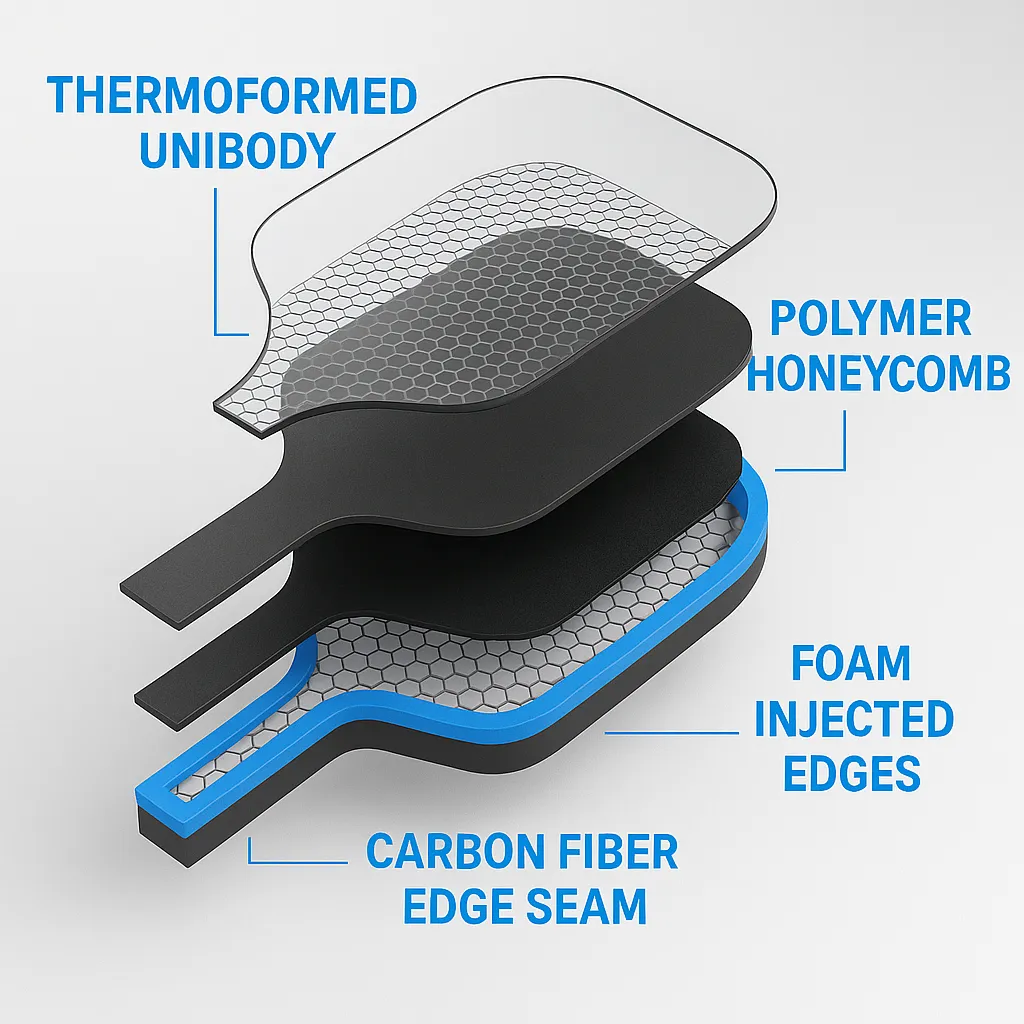
Gen 2 pickleball paddle construction with polymer honeycomb core, foam injected edges, and carbon fiber edge seam featured in Pickleball Paddle Generations
Exploded view of Gen 2 pickleball paddle construction.

Generation 2 marks a major leap forward in paddle engineering. Paddles are now fully thermoformed, a process where materials are heat-molded under pressure into a seamless unibody construction. This gives a stiffer feel and eliminates weak points in the paddle’s structure. Which is also often combined with the integration of foam-injected sidewalls, improving sweet spot consistency.

What makes Gen 2 paddles unique is their blend of power and consistency. The rigid structure enhances the power and pop, and the foam edge wall offers improvement to the sweet spot and reduces vibration. But this new technology introduces new problems. Paddles that are thermoformed are much more likely to have core crushing, where cells in the polymer honeycomb have collapsed. This is caused by the overcompression during the thermoforming process and can lead to inconsistencies in power across the paddle face.

Players who are more competitive often prefer Gen 2 paddles because they allow for more consistency, better power, and greater durability. These paddles offer a high-performance feel and are ideal for players ready to level up with advanced equipment.

Generation 3: Dual Foam Walls

Close-up of next-gen pickleball paddle with Propulsion Core technology activating power and spin, featured in Pickleball Paddle Generations
Propulsion Core technology inside a modern pickleball paddle — boosting power, spin, and control.

Generation 3 paddles build on thermoforming technology but focus specifically on enhancing the internal core. Taking thermoforming a step further, manufacturers introduced dual foam walls or floating cores inside the paddle face. This design increases energy return, creating a noticeable “trampoline effect” where the paddle propels the ball more powerfully off the face. This slingshot effect results in greater power and also restores dwell time, allowing for improved shot shaping.

These paddles tend to feel more powerful than their predecessors, with an enlarged sweet spot and increased pop. However, some Gen 3 paddles have faced scrutiny in professional play due to performance inconsistencies or exceeding power thresholds.

Still, Gen 3 paddles appeal to players who want that extra edge, more depth on serves, better topspin, and sharper counters. Their feel is livelier, and their design caters to competitive players.

Generation 4: Full Foam Core

Gen 4 paddles continue to refine paddle performance by focusing on feel, consistency, and control. These paddles get rid of the standard polymer honeycomb core and replace it with foam and other materials. Manufacturers will also have different patterns across the internal foam core, which can create a different feel. While many still use thermoforming, some Gen 4 paddles return to cold-pressed construction, especially as manufacturers experiment with different ways to optimize foam-core technology. Unlike polymer cores, foam cores do not risk core crushing, so cold-press methods can still offer great durability.

These paddles typically use optimized foam placement inside the paddle and along the edges, creating a more stable response across the entire hitting surface. The result is a paddle that feels consistent on every shot, whether you hit the sweet spot or not. The spin capabilities remain high, thanks to textured composite faces, but without sacrificing touch shots or resets near the net.

While not officially labeled “Gen 4” by all manufacturers, this evolution is recognized by players and engineers as the next phase in balancing power with precision. Gen 4 paddles are ideal for players who prioritize control and comfort, especially in long matches or competitive settings. They are the most advanced paddles on the market today and a favorite among serious players and pros.

Do All Pickleball Paddle Generations Have a Break-In Period?

Now you might be wondering: does my paddle need time to “break in”? The short answer is: yes, many do benefit from a short break-in period. All generations of pickleball paddles do break in, with maybe the exception of wooden paddles. With the Gen 4 foam cores, some manufacturers advertise no break-in period, but a few creators have reported slight changes in performance over time due to settling foam.

What Happens During a Break-In Period?

When you first start using a paddle, the materials may slightly adjust with play:

  • Foam edges and polymer cores can settle and slightly soften, leading to a more consistent feel and improved control.
  • The adhesive or bonding starts to loosen and can cause more of a trampoline effect leading to more power.

How Long Does It Take?

Most paddles don’t require a long break-in period. In general:

  • 5 to 10 hours of play is enough for the paddle to reach its optimal feel. But some other paddles may take weeks
  • After this break-in, performance remains consistent for months until natural wear begins.

Signs Your Paddle Has Broken In

  • You notice more reliable control and power.
  • The paddle feels more comfortable and predictable with every swing.
  • When contacting the ball, there’s more of a plush feeling.

Should You Worry?

No — breaking in your paddle is a natural process. You don’t need to do anything special:

  • Just play games as normal.
  • After 5 to 10 hours, you’ll likely feel the paddle performing at its best.

Conclusion: Choosing the Right Paddle for Your Game

Whether you are brand new to pickleball or a seasoned player looking to upgrade, knowing the differences between paddle generations can help you make a smarter decision. If you are just starting out, a Generation 1 or 1.5 paddle offers a simple and affordable way to get into the game. If you are looking for more responsiveness, a Gen 2 or 3 paddle may give you that edge. If you are focused on consistency and reducing strain during long games, a Gen 4 paddle might be your perfect match.

The paddle you choose can shape how you play and how much you enjoy the game. As pickleball continues to evolve, paddle technology will keep improving, and players will keep reaping the benefits.