How Pickleball Paddle Generations Have Transformed the Game

Pickleball is one of the fastest-growing sports in the U.S., and it is easy to see why. The sport combines elements of tennis, ping pong, and badminton into a fun, fast-paced game that people of all ages can enjoy. While it is easy to get started with just a paddle and a ball, more players are realizing that the paddle you choose makes a big difference in how you play and also in how you improve.
In this article, we will discuss:
Over the years, pickleball paddles have gone through several stages of innovation. Each generation of paddles, from the original wooden designs to today’s advanced foam-core technology, offers different benefits depending on your skill level, style of play, and personal preferences. This article explores the differences between pickleball paddle generations 0, 1, 1.5, 2, 3, and 4 to better understand which paddle may be the perfect fit for you, whether you are a complete beginner or an experienced player looking to up your game.
Generation 0: The Wooden Era

The first pickleball paddles were elementary and made of solid wood. These paddles were heavy, lacked flexibility, and provided minimal control. While they served their purpose in the sport’s infancy, wooden paddles quickly became obsolete as manufacturers experimented with lighter and more responsive materials.
Generation 1: Cold-Pressed Construction
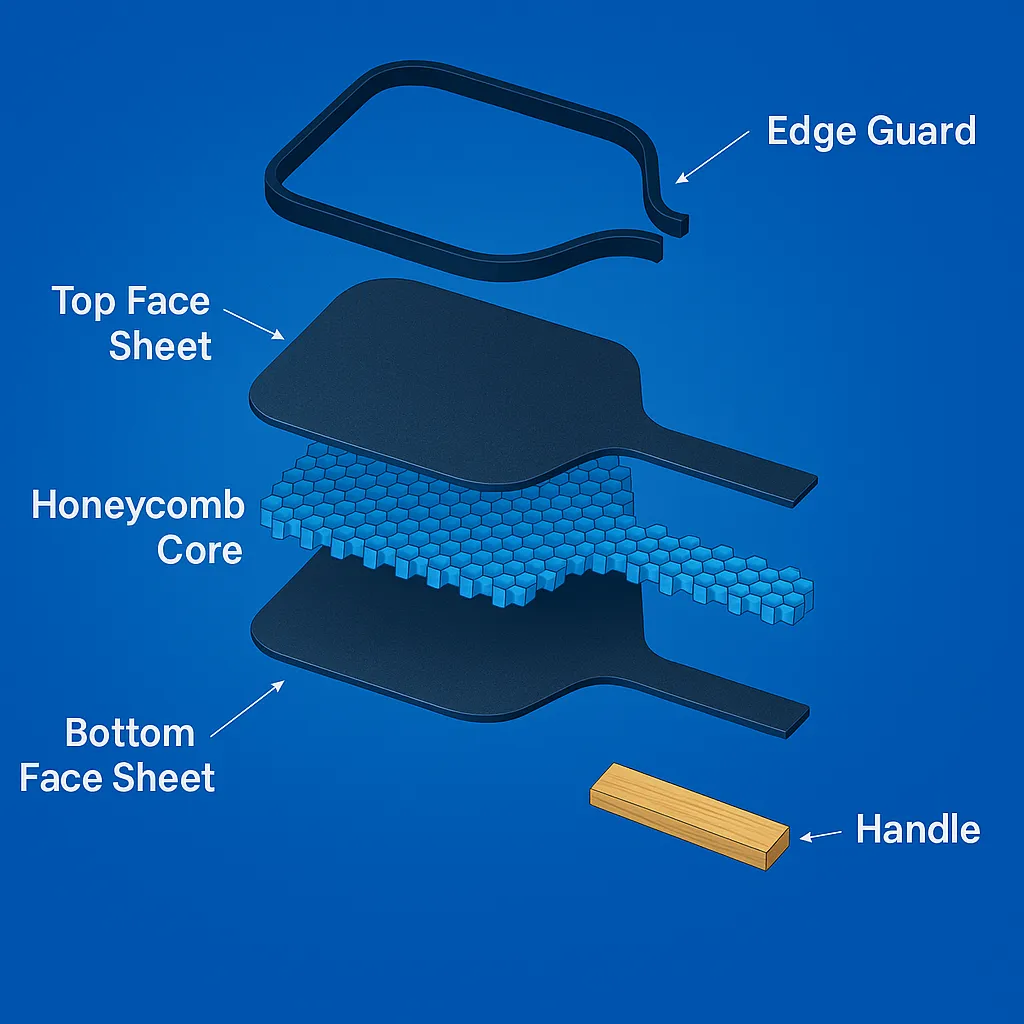
Generation 1 paddles are defined by a cold-press construction process and relatively basic materials. Because they are cold pressed, there is more ball dwell time and a plush feel, allowing for easier shaping. These paddles use traditional polymer honeycomb cores and are built without high-pressure molding or edge foam. Most Gen 1 paddles feature fiberglass or simple carbon fiber faces and are assembled using adhesive, making them more prone to delamination, a situation where the paddle’s internal layers begin to separate over time due to having a weaker bond.
These paddles are ideal for beginners due to their lower price point, great control, and straightforward feel. Players can still find paddles in this category on the market, especially in entry-level and recreational products. The downside of Gen 1 paddles is their limited durability and less consistent performance across the paddle face.
Generation 1.5: Foam Injection
Generation 1.5 paddles still use the cold-press assembly process, but they introduce improvements to both materials and paddle architecture. While the internal honeycomb core remains, models also include foam-injected edge walls, providing added stability and vibration dampening. These subtle upgrades make Gen 1.5 paddles more suitable for intermediate players, though the structural design still limits maximum power output and sweet spot consistency.
The combination of more premium surface materials with a still basic internal build is what defines this generation. These paddles help bridge the gap between affordable recreational paddles and more premium competition-ready models.
Generation 2: Thermoforming
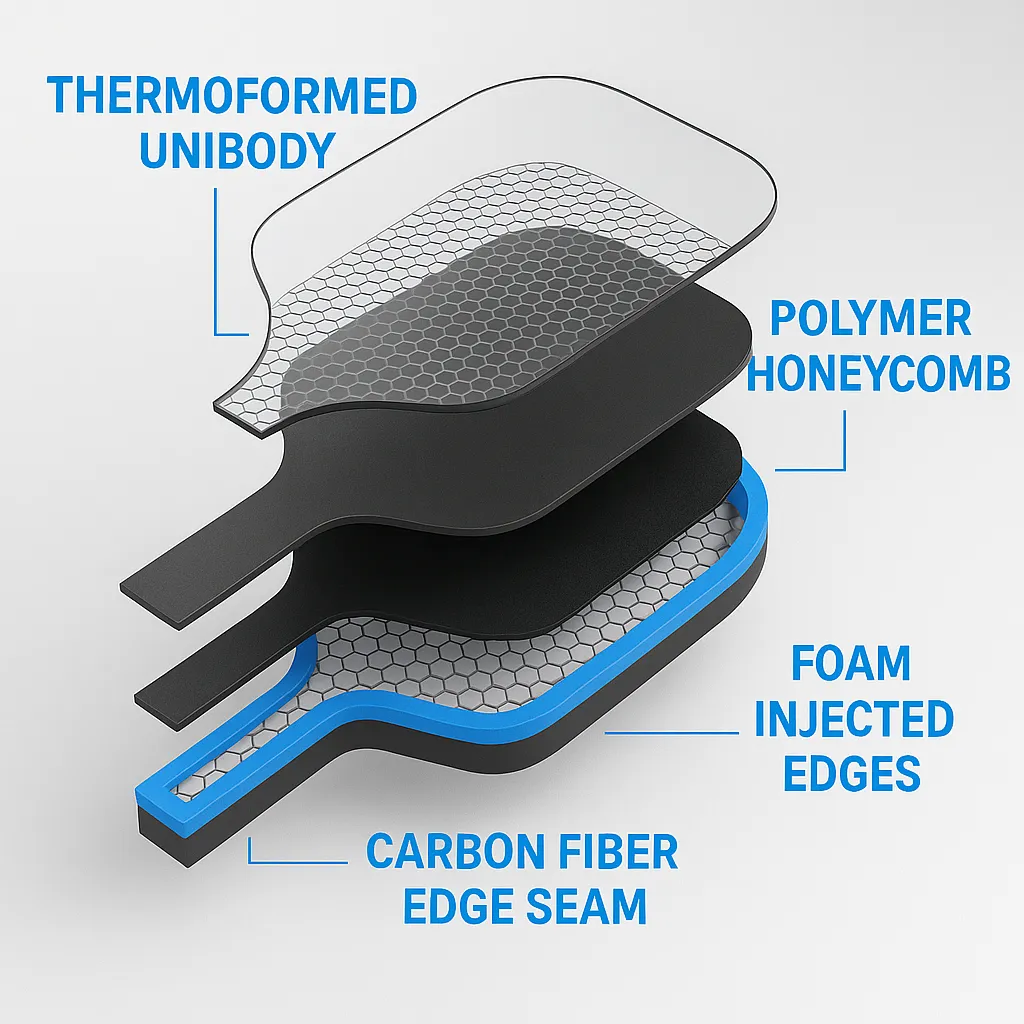
Generation 2 marks a major leap forward in paddle engineering. Paddles are now fully thermoformed, a process where materials are heat-molded under pressure into a seamless unibody construction. This gives a stiffer feel and eliminates weak points in the paddle’s structure. Which is also often combined with the integration of foam-injected sidewalls, improving sweet spot consistency.
What makes Gen 2 paddles unique is their blend of power and consistency. The rigid structure enhances the power and pop, and the foam edge wall offers improvement to the sweet spot and reduces vibration. But this new technology introduces new problems. Paddles that are thermoformed are much more likely to have core crushing, where cells in the polymer honeycomb have collapsed. This is caused by the overcompression during the thermoforming process and can lead to inconsistencies in power across the paddle face.
Players who are more competitive often prefer Gen 2 paddles because they allow for more consistency, better power, and greater durability. These paddles offer a high-performance feel and are ideal for players ready to level up with advanced equipment.
Generation 3: Dual Foam Walls
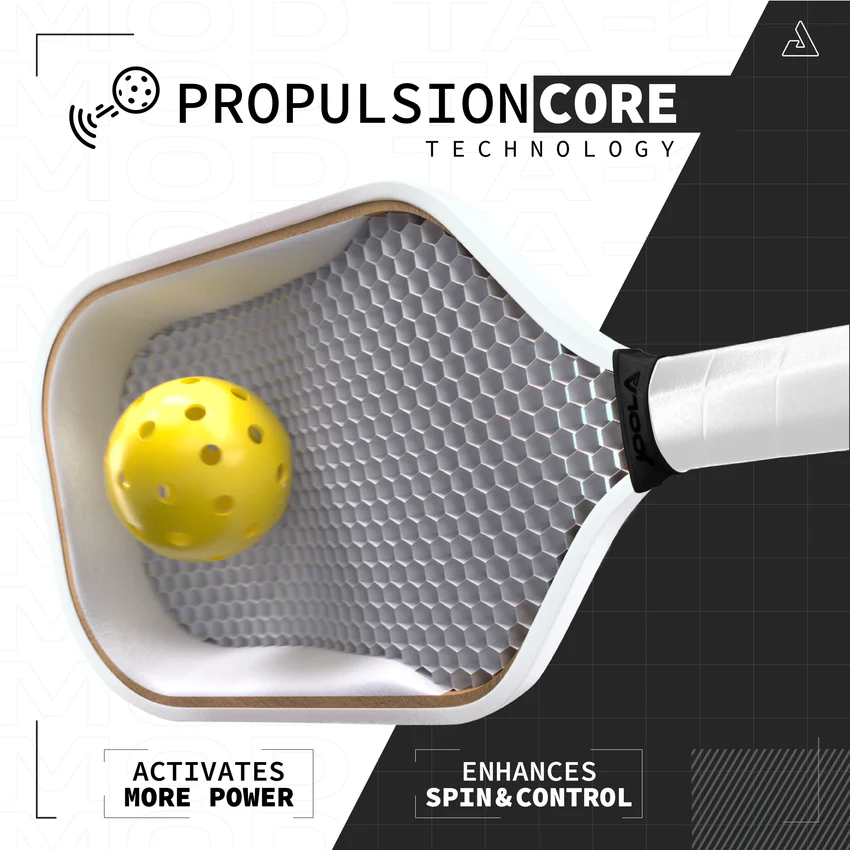
Generation 3 paddles build on thermoforming technology but focus specifically on enhancing the internal core. Taking thermoforming a step further, manufacturers introduced dual foam walls or floating cores inside the paddle face. This design increases energy return, creating a noticeable “trampoline effect” where the paddle propels the ball more powerfully off the face. This slingshot effect results in greater power and also restores dwell time, allowing for improved shot shaping.
These paddles tend to feel more powerful than their predecessors, with an enlarged sweet spot and increased pop. However, some Gen 3 paddles have faced scrutiny in professional play due to performance inconsistencies or exceeding power thresholds.
Still, Gen 3 paddles appeal to players who want that extra edge, more depth on serves, better topspin, and sharper counters. Their feel is livelier, and their design caters to competitive players.
Generation 4: Full Foam Core
Gen 4 paddles continue to refine paddle performance by focusing on feel, consistency, and control. These paddles get rid of the standard polymer honeycomb core and replace it with foam and other materials. Manufacturers will also have different patterns across the internal foam core, which can create a different feel. While many still use thermoforming, some Gen 4 paddles return to cold-pressed construction, especially as manufacturers experiment with different ways to optimize foam-core technology. Unlike polymer cores, foam cores do not risk core crushing, so cold-press methods can still offer great durability.
These paddles typically use optimized foam placement inside the paddle and along the edges, creating a more stable response across the entire hitting surface. The result is a paddle that feels consistent on every shot, whether you hit the sweet spot or not. The spin capabilities remain high, thanks to textured composite faces, but without sacrificing touch shots or resets near the net.
While not officially labeled “Gen 4” by all manufacturers, this evolution is recognized by players and engineers as the next phase in balancing power with precision. Gen 4 paddles are ideal for players who prioritize control and comfort, especially in long matches or competitive settings. They are the most advanced paddles on the market today and a favorite among serious players and pros.
Do All Pickleball Paddle Generations Have a Break-In Period?
Now you might be wondering: does my paddle need time to “break in”? The short answer is: yes, many do benefit from a short break-in period. All generations of pickleball paddles do break in, with maybe the exception of wooden paddles. With the Gen 4 foam cores, some manufacturers advertise no break-in period, but a few creators have reported slight changes in performance over time due to settling foam.
What Happens During a Break-In Period?
When you first start using a paddle, the materials may slightly adjust with play:
- Foam edges and polymer cores can settle and slightly soften, leading to a more consistent feel and improved control.
- The adhesive or bonding starts to loosen and can cause more of a trampoline effect leading to more power.
How Long Does It Take?
Most paddles don’t require a long break-in period. In general:
- 5 to 10 hours of play is enough for the paddle to reach its optimal feel. But some other paddles may take weeks
- After this break-in, performance remains consistent for months until natural wear begins.
Signs Your Paddle Has Broken In
- You notice more reliable control and power.
- The paddle feels more comfortable and predictable with every swing.
- When contacting the ball, there’s more of a plush feeling.
Should You Worry?
No — breaking in your paddle is a natural process. You don’t need to do anything special:
- Just play games as normal.
- After 5 to 10 hours, you’ll likely feel the paddle performing at its best.
Conclusion: Choosing the Right Paddle for Your Game
Whether you are brand new to pickleball or a seasoned player looking to upgrade, knowing the differences between paddle generations can help you make a smarter decision. If you are just starting out, a Generation 1 or 1.5 paddle offers a simple and affordable way to get into the game. If you are looking for more responsiveness, a Gen 2 or 3 paddle may give you that edge. If you are focused on consistency and reducing strain during long games, a Gen 4 paddle might be your perfect match.
The paddle you choose can shape how you play and how much you enjoy the game. As pickleball continues to evolve, paddle technology will keep improving, and players will keep reaping the benefits.